For many individuals living with Major Depressive Disorder (MDD), the journey toward healing can feel like an endless cycle of trial and error. When standard treatments—such as oral antidepressants and traditional psychotherapy—fail to provide adequate relief, a sense of “treatment resistance” can set in. This is not a failure of the patient, but rather a limitation of the current pharmacological approach for certain brain chemistries.
If you or a loved one are searching for a path forward that doesn’t involve systemic side effects or invasive procedures, TMS therapy for depression offers a scientifically proven, FDA-cleared alternative. At the TMS Center of Wisconsin, we specialize in this advanced neurological approach to help patients in the Milwaukee area reclaim their lives.
What is TMS Therapy?
Transcranial Magnetic Stimulation (TMS) is a non-invasive, non-systemic medical procedure that uses magnetic pulses to stimulate specific nerve cells in the brain involved in mood control and depression. Unlike medications, which travel through the bloodstream and affect the entire body, TMS is a targeted “local” treatment.It is specifically designed for patients with Treatment-Resistant Depression (TRD)—defined generally as those who have not achieved satisfactory improvement from prior antidepressant medications.
How TMS Therapy Works for Depression: The Science of Neuroplasticity
To understand how TMS works, we must look at the biology of the depressed brain. Research published by the National Institutes of Health (NIH) shows that in individuals with clinical depression, certain areas of the brain—specifically the Dorsolateral Prefrontal Cortex (DLPFC)—exhibit “hypoactivity.” This means these regions are underactive, leading to the emotional “fog,” fatigue, and persistent sadness associated with the disorder.
1. Magnetic Pulse Delivery
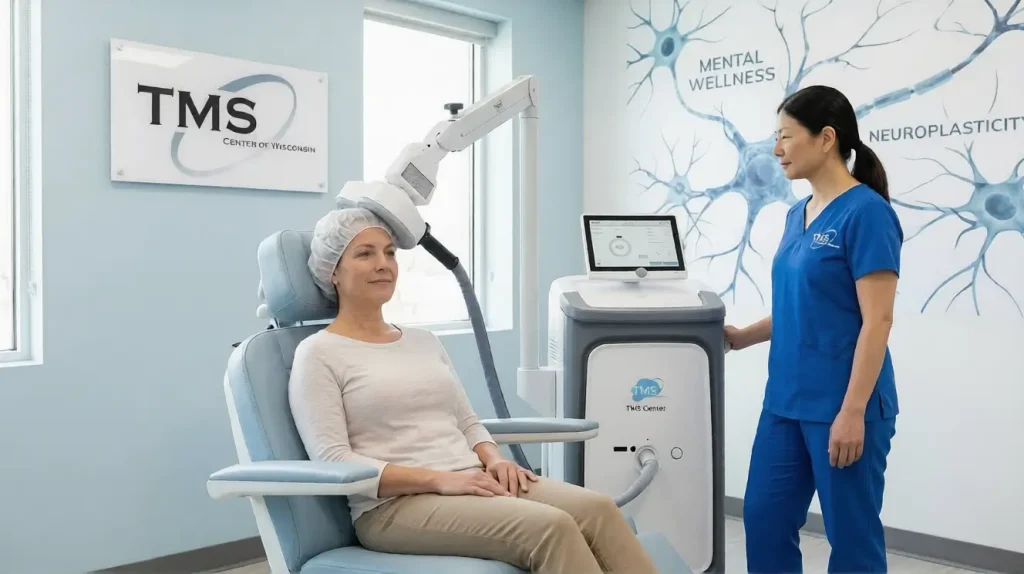
During a session, a specialized electromagnetic coil is placed against the scalp. This coil delivers brief, repetitive magnetic pulses (similar in strength to an MRI) that pass painlessly through the skull.
2. Targeted Stimulation
These pulses focus on the Prefrontal Cortex. The magnetic energy creates small electrical currents in the brain tissue, causing the neurons (nerve cells) in that region to “fire” or depolarize.
3. Strengthening Neural Pathways
Depression often results from “weak” communication between neurons. TMS acts like a workout for the brain. By repeatedly stimulating these underactive neurons, TMS encourages neuroplasticity—the brain’s ability to reorganize itself by forming new neural connections. Over a series of sessions, these pathways become stronger and more efficient at regulating mood.
4. Balancing Neurotransmitters
While medications try to balance chemicals like serotonin and dopamine through the digestive system, TMS stimulates the natural release of these neurotransmitters directly at the source.
The Patient Experience: What to Expect at Our Wisconsin Clinics
One of the greatest benefits of TMS is that it fits into a normal daily routine. Because it is non-invasive, there is no anesthesia, no sedation, and no “recovery time.”
- The Initial Evaluation: Your journey begins with a comprehensive psychiatric evaluation to determine if TMS is the right clinical fit for your history. While we do not offer “free” consultations, this initial medical evaluation is covered by most major insurance providers, ensuring your path to specialized care is accessible.
- The Initial Mapping: During your first treatment visit, our clinical team performs “mapping” to identify your specific motor threshold. This ensures the coil is placed with millimeter precision to target the exact area of your brain that requires stimulation.
- The Treatment Session: You will be seated comfortably in a reclining chair. You will remain fully awake and alert. You might hear a clicking sound and feel a tapping sensation on your head, often described as similar to a firm tap of a fingernail.
- Duration: A typical session lasts between 18 and 40 minutes, depending on the specific protocol (such as standard TMS or Theta Burst Stimulation).
- Post-Treatment: Once the session ends, you can immediately drive yourself home or back to work. There are no cognitive side effects or “brain fog” associated with the treatment.
Why Choose TMS Over Medication?
While antidepressants are a vital tool for many, they are not a universal solution. Many patients choose TMS because of the following factors:
| Feature | Oral Antidepressants | TMS Therapy |
|---|---|---|
| Method | Systemic (Bloodstream) | Targeted (Neurological) |
| Side Effects | Weight gain, nausea, sexual dysfunction | Mild scalp discomfort (temporary) |
| Invasiveness | Chemical intervention | Non-invasive magnetic pulses |
| Success Rate | Declines with each failed medication | High efficacy for treatment-resistant cases |
Is TMS Therapy Right for You?
TMS is generally recommended for adults who meet the following criteria:
- Diagnosed with Major Depressive Disorder (MDD) or Anxious Depression.
- Have found limited or no relief from at least two different antidepressant medications.
- Are seeking a treatment that does not interfere with daily cognitive function or physical health.
Note: TMS is not suitable for patients with non-removable metal implants in or near the head (excluding braces or dental fillings) or those with certain seizure disorders.
Common Questions About TMS in Wisconsin
Check our full TMS Therapy FAQs for more details on the following:
How long do the results of TMS last?
Most patients experience relief for months or even years after a full course of treatment (usually 30–36 sessions). Some patients may return for “maintenance” sessions if symptoms begin to resurface.
Is TMS therapy covered by insurance?
Yes. Most major insurance providers in Wisconsin, including Medicare and private plans like Blue Cross Blue Shield, UnitedHealthcare, and Humana, cover TMS therapy. This includes the initial psychiatric evaluation required to start treatment.
Is TMS the same as ECT (Electroconvulsive Therapy)?
No. Unlike ECT, TMS does not require sedation, does not induce a seizure, and has no associated memory loss. It is a much gentler, more modern approach to brain stimulation as noted in FDA-cleared protocols..
How soon will I feel better?
While some patients notice a “lift” in mood within the first two weeks, most clinical improvements occur between weeks four and six of a consistent treatment schedule.
Reclaiming Your Mental Health in Milwaukee
Depression can make you feel like you are out of options, but the science of neuroplasticity suggests otherwise. By targeting the biological roots of mood regulation, TMS therapy offers a bridge from “surviving” to “thriving.”
At the TMS Center of Wisconsin, we are dedicated to providing a compassionate, high-tech environment for your healing journey. If you are ready to explore a medication-free path to mental wellness, our team is ready to guide you through the clinical evaluation process.
Would you like to schedule your clinical evaluation to see if you are a candidate for TMS therapy? Contact the TMS Center of Wisconsin Today